Buildings & Grounds
Experience Deeper Meaning in Our Sacred Surroundings
The Church of St. James the Less has a rich history and many find their relationship with God and His Church is enriched by connecting with our buildings and grounds.
A National Historic Landmark
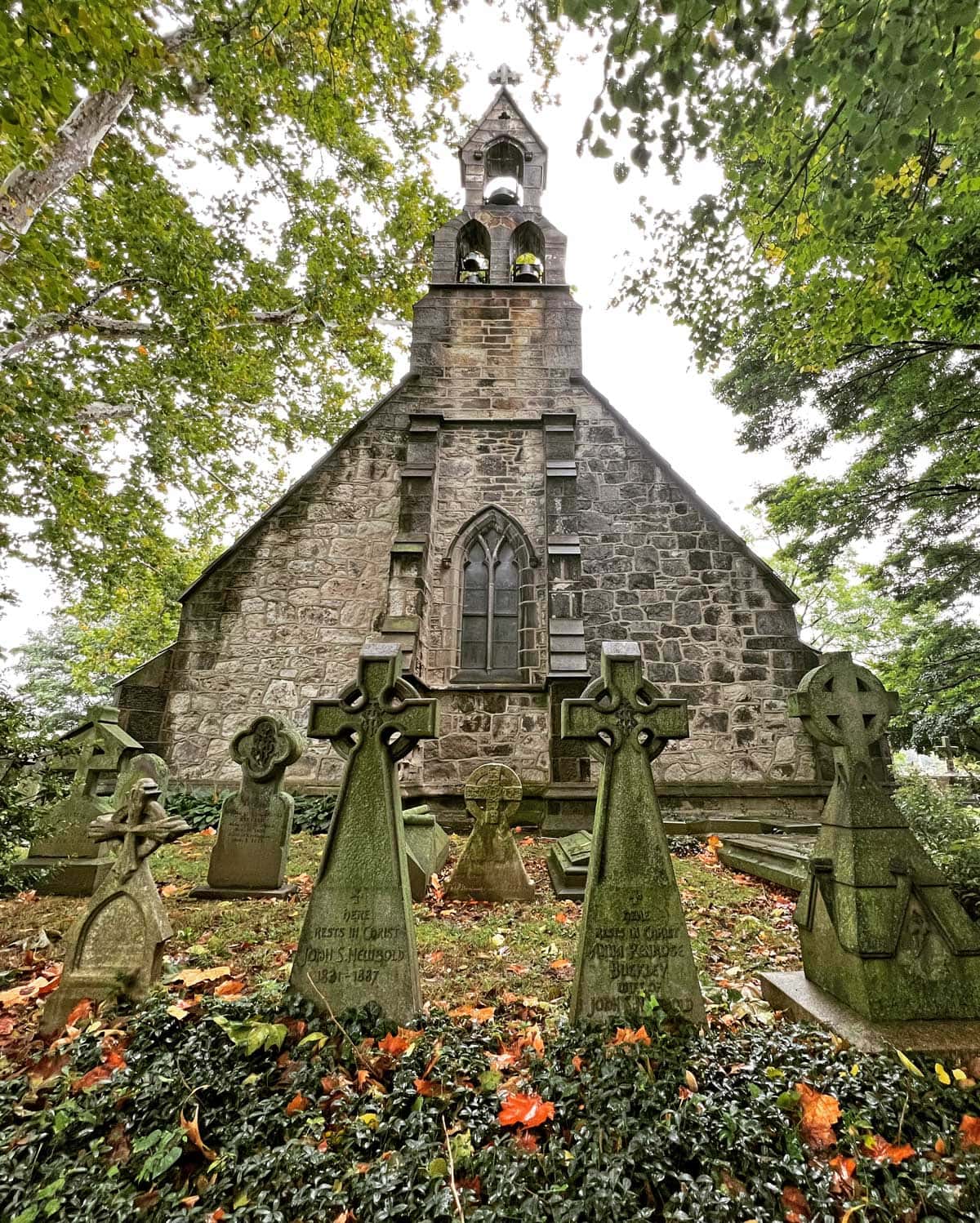
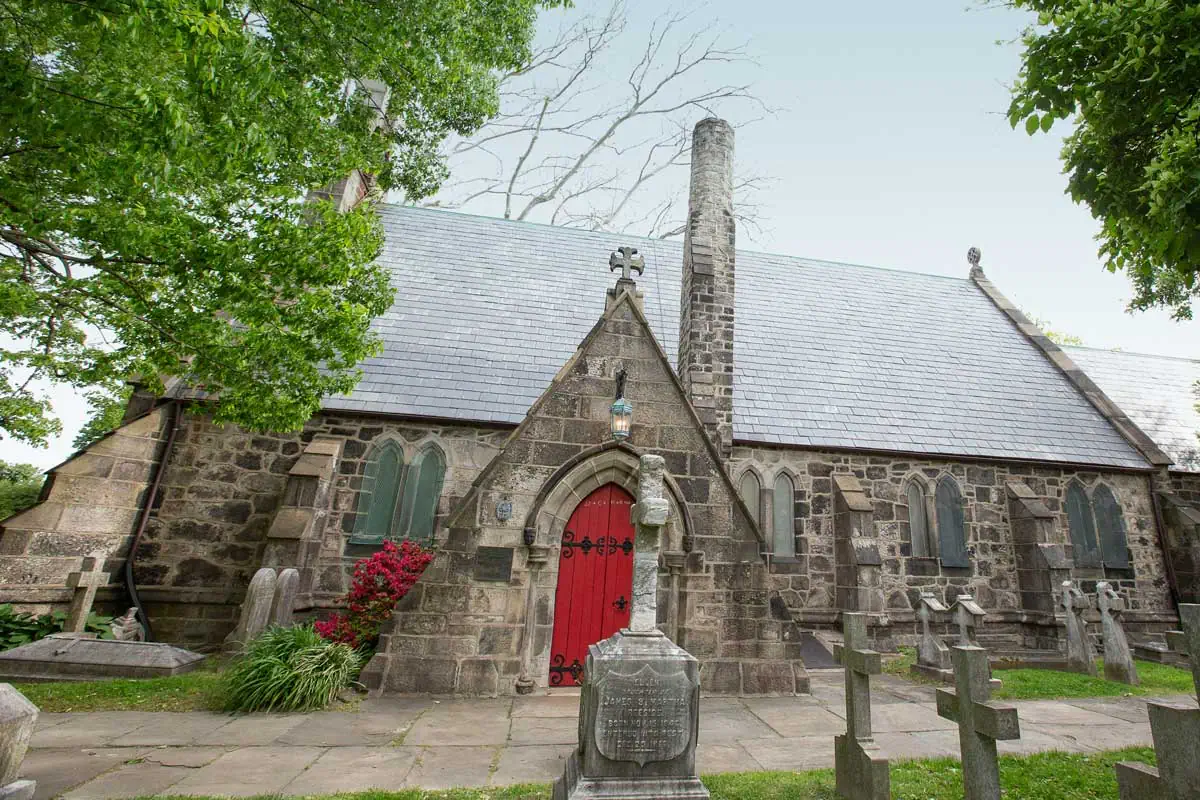
Our church was founded by prominent Philadelphians and has been serving the surrounding area since 1846. The building was added to the National Register of Historical Places in 1974 and was designated a National Historic Landmark in 1985.
The National Park Service’s official 1985 Statement of Significance reads: “This is the first example of the pure English Parish church style in America, and one of the best examples of a 19th-century American Gothic church for its coherence and authenticity of design. Its influence on the major architects of the Gothic Revival in the United States was profound.”
The building’s remarkable fidelity to Gothic design was accidental. The new congregation reached out to the Cambridge Camden Society in Cambridge, England, for a set of approved church plans true to the Gothic style. They were inadvertently sent measured drawings, prepared by G. G. Place, of St. Michael’s Church in Longstanton, Cambridgeshire, built c. 1337. Those plans were followed in almost every detail under the supervision of architect John E. Carver.
Additional buildings constructed later on the church campus were a parish hall, built in 1918 on the opposite side of West Clearfield Street, and the Wanamaker Memorial Bell Tower and mausoleum, built in the churchyard in 1908. Designed by John T. Windrim, the 50-foot Wanamaker Tower houses a set of J.C. Deagan tower chimes and a chime of bells by the McShane foundry.
The Wanamaker Tower was commissioned by Rodman Wanamaker as a memorial to his brother, Thomas B. Wanamaker, and serves as the final resting place for several members of the Wanamaker family, including department store founder John Wanamaker, II.
Conflict, Court Battle, Abandonment
The clergy and parishioners of St. James the Less broke away from the Episcopal Diocese of Pennsylvania in 1999 over theological differences. The Diocese sued the parish in 2001 to seize the property. After a lengthy court battle, the Diocese assumed control of the property, closed the church in 2006, padlocked the gates, and abandoned the property.
In 2008, Saint Mark’s Church, Philadelphia, petitioned the Diocese to adopt the Church of St. James the Less as a mission. The Standing Committee of the Diocese voted to allow it. That led to the property’s reopening and made possible the vision of Saint Mark’s Chaplain and devoted parishioners to open a school in the former parish house. Learn about the history of St. James School.
Cemetery and Notables Buried Here
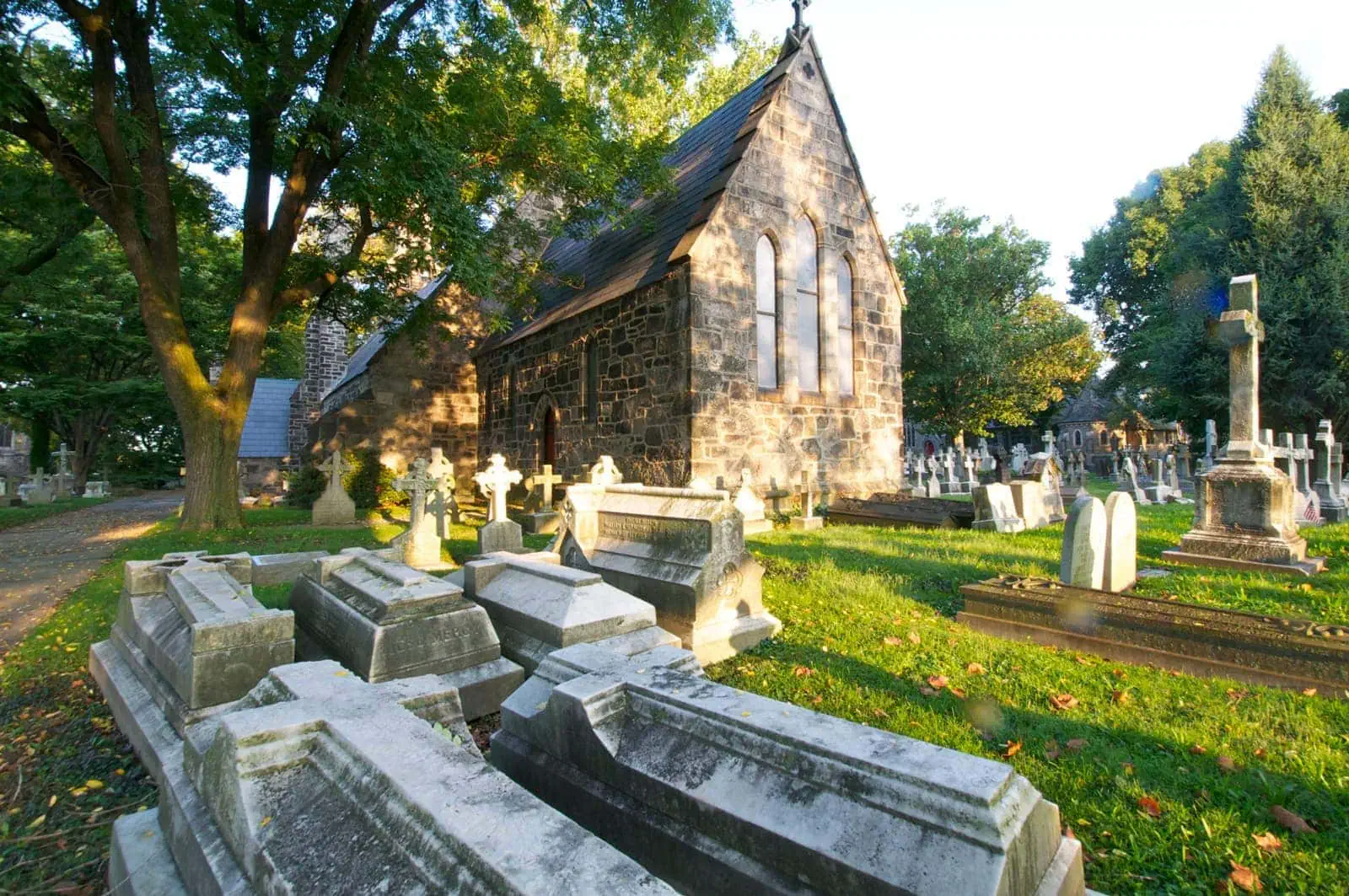
The cemetery at the Church of St. James the Less is open to the public seven days each week from dawn to dusk. We offer guided tours by appointment. To request a tour, email the Chaplain: [email protected].
Click the link to view a list of the many prominent people who are buried here.

A Spiritual and Photographic Guide
Servant Year member John E. Hager published a spiritual and photographic guide to St. James School’s parish, the Church of St. James the Less, in 2023.
In the guide, John shares an in-depth look at the church’s founding in 1846 and the purposeful choices made for the building’s design, construction, and use.
Click here to download a PDF of the guide at no charge.
We request a small donation to provide a printed copy of the book. Click here to make a donation and order a copy.
